Headlines from First Thoughts

Wednesday, July 05, 2006

Like new Language, Dude


I've learned a few things have changed since I was in a youth group 16 years ago. Today's students pretty much speak using two words, "Dude," and "Like." They can be used in all its many verb, noun, adjective, adverb, and prepositional forms. For instance, in the following conversation between two teenagers:

"Dude, like the potato skins, dude, taste, like tires."

"I'm like Dude, you know what, you're right, Dude, they are like that."

"So, like what are you liking from this Passport, Dude?"

"I don't like my Bible Study Dude, but he I do like Michael and Carol; they're cool Dude."

I've decided then if I need to preach a sermon that really relates to youth, all I need to do is just use "Like" and "Dude" every other word.

"So, like did you hear the one about David and like Goliath. Goliath was like a bad Dude, but little Dude David was like yea, well, you know, a Dude. So like he threw these like stones like at his head, and DUDE, Goliath was dead, Dude."

Hey Dude, they should like that, don't you think?

Tuesday, July 04, 2006

Free Time


The thing about Passport on the counselor end of the relationship is that there is LOTS of free time. I never knew this much free time existed as a camper. I thought counselors were always doing stuff. Important stuff. Like getting ready for my next round of water-polo-paint ball-frisbee-hot-dog-eating-contest. But no, counselors do important things throughout the day. Things very spiritual. Like eating scones, drinking coffee, and comparing notes on the sizes of their youth groups.

And we learn important information about each other. Did you know there are counselors here from Tampa who are students at UT? I had no idea that people in Tampa knew there were universities outside of the state of Hanging Chad—er—Florida. But, yes, one actually travels to Knoxville—and prefers to Knoxville to Tampa. I understand why, but someone in Florida recognizes this.

We also discover that whether there are students from New York, Indiana, Ohio, or Tennessee, they share the same set of worries, problems, struggles, issues, and possibilities as other students. Everyone is looking for some freedom, and today is a day to rejoice in Christ’s liberation and to reflect even more on the opportunities we have to share our blessings with others.

Monday, July 03, 2006

Passport: Who Am I?

Kyle Reasons (1st year at Passport) learns what a camera is).

I’m spending a week with our youth at Passport on the Campus of Wingate University in Wingate, North Carolina. This town reminds me a little bit of Cantonment, Florida, with a college in the middle. You cross the railroad tracks to enter the campus, and you hear the train going by in the night.

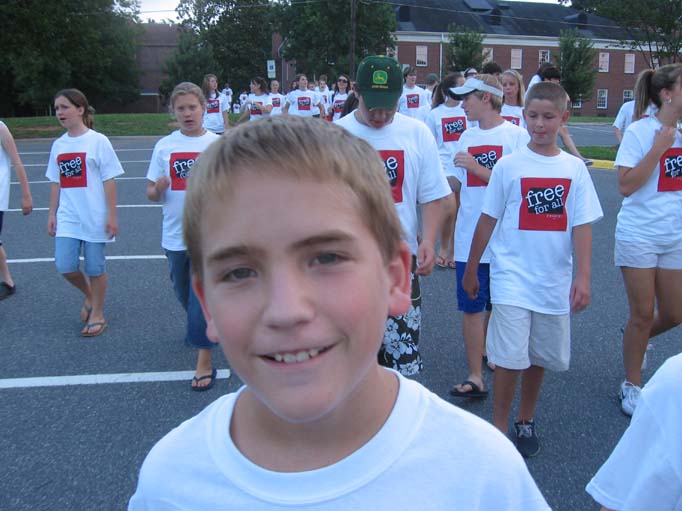
Here 18 of our students, along with about 250-300 from other churches, are enjoying a spiritual renewal week. This is a camp of being and doing. We spend time studying the Bible and then going out into the community serving in mission groups. The sponsors assist the students as they do their mission projects.

My group went to a local nursing home to visit with residents. The students made 4th of July Decorations for the doors, bused tables, and sang hymns. A few of the students actually knew the hymns. I had to teach them “The Cloudless Day,” complete with the edition from the 1954 Baptist Hymnal. The residents, of course, know the hymns by heart. I’m sure the students felt as awkward as some of the residents would have at a contemporary worship service, but we got along just fine and sang anyway.

The theme of this week’s Youth Camp, Free for All, was captured in a conversation that Carol McEntyre had with one of our students. The student was lamenting that she did not know what to do and was worried if the camp experience would turn out all right. Carol assured her, “Just be yourself,” and she responded with exasperation, “But I don’t know who I am!” Perhaps that’s what we’re all about this week.

Thursday, June 29, 2006

Great VBS Week

Parker at VBS

Parker at VBS

More VBS

More picts

VBS 2006


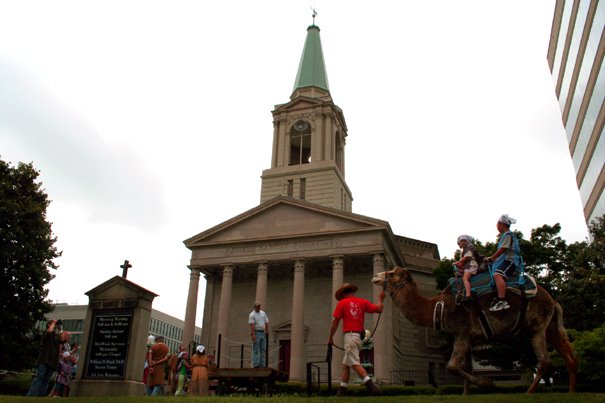
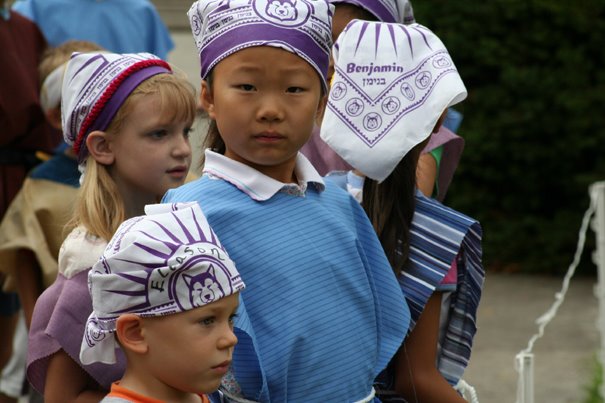
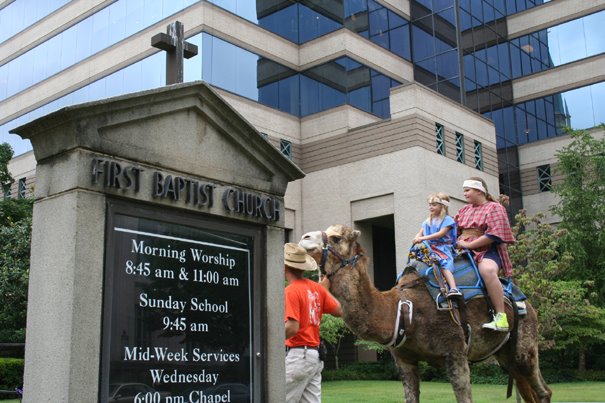
We're having a great week of Bible School at First Baptist-- complete with camel rides.

Monday, June 26, 2006

Missions: Experiences, Relationships, Lifestyle

USA Today says that Mission trips may do more harm than good. I'm sure that's the same argument people made before the idea of "partnership missions" became so popular. During the great missions movements of the 40 and 50s, people empowered individuals to leave churches and "Rescue the Perishing" in foreign lands. With the global village at our doorstep, we have grown in our understanding of missions. Everyone is a missionary. Each Christian has the apostolic call. Macedonia is Main Street.

Partnership missions or short-term mission trips have been the primary catalyst driving international service since the 1970s. We should distinguish between experiences, relationships, and lifestyle missions, however.

USA Today describes the dangers of experiential mission trips. These are designed to give individuals who have never been exposed to the problems of the world a chance to see it firsthand. It's hard to believe that Americans would not understand how impoverished other parts of the world are. No, it's really not hard to believe. Hence the reason for taking blessed Americans to places not nearly as blessed materially. These once in a lifetime experiences raise awareness and cause individuals to be more sensitive to needs in their homes. The downside is that some groups merely return with a great powerpoint show for their churches, and churches risk becoming God's travel agency, offering great discounts to faraway lands. The article fails to note, however, that most of the Katrina recovery process has been placed on the backs of churches and religious groups taking experiential trips. And they have risen to the challenge.

Relationship trips are ongoing ministry opportunities designed to do more than simply benefit the traveler. These collaborations take churches and groups to parts of the world that over the long haul, prove beneficial for both parties. Not only do you see the individuals in a particular place, but you see their lives (and yours) change. The risk of course is that the host becomes dependent on the visitor. The opportunity, however, goes far beyond the risks.

Third is the lifestyle of missions. This is the ultimate end of the journey, when a person sees her life as one called to a place, to serve a people, wherever the road takes her.

Sunday, June 25, 2006

Mission Trips-- Do they Work?

I'm a mission trip veteran. If mission trips had ranks, I'd at least be 2nd Lieutenant. I've swung more hammers, weed-whacked more yards, and enjoyed more Kool-Aid from yellow igloo coolers than I can count. But after all the work, do they do any good? A recent article in USA Today questions the value of short-term mission trips.

I'd like to explore this idea over the next few posts. First, the article....

"On a mission — a short-term mission"
Posted 6/18/2006

By G. Jeffrey MacDonald, Special for USA TODAY
As a single mother and elementary-school music teacher in Alamogordo, N.M., Cheryl Dockray usually umpires all the summer softball games she can to make ends meet.
But in early June, she took a rare week off — and worked even harder than usual. With eight other adults and 13 young people from Alamogordo's Grace United Methodist Church, she helped gut a New Orleans home that had been rotting in floodwaters for nine months.

"I can't give huge monetary donations, but I can give of myself and my time," Dockray says from Kenner, La., where the group was sleeping on air mattresses at a church.

Short-term mission trips (less than two weeks) are enjoying a wave of popularity with Americans eager to put faith into action and make vacations meaningful. About 1.6 million Americans took such trips abroad last year, according to a survey by Robert Wuthnow, Princeton University sociologist of religion. Domestic trips, which peak in the summer, are even more popular.

Popular as they are, critics say, short-term mission trips can be counterproductive — or worse. Concerns surface especially with international trips.

Judd Birdsall, former managing editor of The Review of Faith & International Affairs, a Christian journal, grew up in Japan in an evangelical missionary home. Too often these days, he says, untrained short-term missioners — or "vacationaries" — offend indigenous populations and undermine hard-earned relationships cultivated by long-term missionaries over many years.

"At this point, it really is an out-of-control phenomenon," Birdsall says. "Americans come in with good intentions, but they couple zeal with ignorance, and that can be a deadly combination for the folks who are on the ground slogging it out year after year."

All too often, groups set off with scant foreign-language skills and minimal cross-cultural training, says David Livermore, author of Serving with Eyes Wide Open. Their construction projects sometimes take work away from locals or come at the expense of more pressing needs, Livermore says, but impoverished hosts dare not protest.

"Often there's too high a price for them to say no to this because often (hosting a group) is the means to getting the check that will help support them."

Volunteers also run the risk of duplicating efforts in today's decentralized mission environment, says Mark Oestreicher of Youth Specialties, an El Cajon, Calif.-based training firm for church youth leaders. One slum in Tijuana, Mexico, for example, now expects regular visits from mission-driven groups from Southern California.

"Each of these groups will come in, do a vacation Bible school and lead the same kids to Christ over and over again," Oestreicher says.

Others concede that the trips aren't perfect but say they do a lot of good. Dana Robert of the Center for Global Christianity and Mission at Boston University points to improved standards of living and broadened perspectives of those who travel, interact and serve.

"A lot of people come back from these trips humbled," Robert says. "I think, on balance, it's more worthwhile than not."

This year, short-term missions are getting a prominent stage as thousands of teams focus on hurricane-damaged regions of the USA. For the first time since Katrina hit last August, volunteers this month are using every bed available from the Louisiana United Methodist Storm Recovery Center as 2,400 teams arrive in the New Orleans area.

Whether the destination is the Gulf Coast or the Persian Gulf, the Internet has made short-term mission trips relatively easy to arrange, says Todd Johnson of the Center for the Study of Global Christianity at Gordon-Conwell Theological Seminary in South Hamilton, Mass. He says fast-growing independent churches have "absolutely transformed" short-term missions over the past decade into an arena where congregations, rather than established agencies with a long-term presence in a region, define trips' goals and parameters.

Pamela Brown of Richmond, Va., says unmediated connections between religious communities help relationships flourish. When her Presbyterian (U.S.A.) church first established a direct tie with a local church and orphanage in Morelia, Mexico, in the late 1990s, "everything we did was fine with them because we left it a better place than we found it."

Based on this model, with "no red tape involved," her church now sends teams quarterly to Kazakhstan to help with dental care, management consulting and other humanitarian ministries.

Proponents of short-term missions generally agree that missionaries need cultural training to be effective, whether their goal is to alleviate physical suffering, win converts or both. The Alamogordo group opted to work within Methodist channels, which provide an orientation and prohibit proselytizing, because no one in the group knew the landscape or needs of New Orleans, says group leader Heath Husted.

For others, the days of seeking guidance from denominations or established agencies are a distant memory.

At the 4,000-member Word of Grace Church in Mesa, Ariz., regular mission trips to Central America, Africa and the Middle East rely on the church's own local connections and in-house training.

"We're not dependent on an agency. ... We don't have a middleman," says the Rev. Andy Jackson, pastor of discipleship and leadership development. "Just because a group calls itself a mission agency, that doesn't mean it provides good quality control."

Sunday, June 18, 2006

Farewell to an Old Friend


The most significant news in Baptist life in Knoxville last week was not the election of a new president of the Southern Baptist Convention. We’re pretty removed from politics now at 510 W Main. The most significant story ran the same day in the local paper. Baptist Hospital is being sold.

Baptists have never been very good at parting ways with their institutions. Like an overprotective parent, we keep a pretty tight rein on our hospitals, universities, and children’s homes. When the rumors started circulating late last year that our old friend Baptist Hospital was officially on the market, the First Baptist family felt a collective sense of loss. East Tennessee’s Baptist Hospital would not exist were it not for Fred Brown and the leadership of First Baptist. Some have even said that Dr. Brown announced in the pulpit of FBC that they needed more money for the hospital and passed the plate until he collected enough. Over the years, First Baptist members have had a strong presence on the board and given time and money to make it possible for everyone to have access to healthcare.

With this week’s news of Triad Health System’s purchase of our baby, we say farewell to an old friend. Long ago, Tennessee Baptists removed themselves from positions of monetary influence. As healthcare costs soared, Tennessee Baptists contributions did not. That’s life today, and we’ve seen this story repeated around the country as various Baptist institutions have grown up and moved on. We have church members today that serve on the board and as employees in each of the healthcare systems in Knoxville. It’s truly a new day in healthcare.

The board and employees of Baptist have been in my prayers the past months. Each person knows the agony of the decision at a personal and private level. We have seen good church members relocate; we have encouraged board members who have made tough, difficult decisions. We will walk beside each person as they face inevitable transitions in the coming days and hopefully welcome new members who are part of Triad’s group.

Several lessons can be learned as people of First Baptist.

(1) The Baptist name is still popular in some circles. Ironically, one of the things Triad wanted to maintain is the name. Isn’t it interesting that the only area where Baptists get good reviews is in healthcare? This should be a lesson to all of us. Baptists as a brand and as a people are at their best when they minister to people in the crisis moments in the name of Christ.
(2) We can still have a prophetic voice. The News-Sentinel’s editorial alluded to a looming crisis if charity cases are not covered in the new system. UT and St. Mary’s can’t do it alone. We need to refocus our efforts to caring for those who cannot afford the benefits that most of us take for granted. We must accomplish this beyond pious rhetoric. Our wallets and actions must match our words.
(3) Institutions grow and change. We should apply the principles of the Baptist experience to Belmont, Carson-Newman, and other institutions. We should allow them freedom to be the best they can be, raise money from as many sources as possible, and help them maintain a Baptist identity in the best sense of the word.
(4) We will always be there for Baptist. First Baptist will continue to send employees and volunteers across the river and out west. Baptists are everywhere. Let’s welcome our new friends, encourage those who remain, and pray for people who will seek new employment.

Farewell, old friend, East Tennessee Baptist Hospital. May the new Baptist carry on the legacy that we have built together.

Saturday, June 17, 2006

No Left Turns-- Something for Father's Day

Michael Gartner wrote a great Father's Day tribute in this weekend's USA Today. Enjoy.
"A Life Without Left Turns"
Michael Gartner

My father never drove a car.
Well, that's not quite right.

I should say I never saw him drive a car. He quit driving in 1927, when he was 25 years old, and the last car he drove was a 1926 Whippet.

"In those days," he told me when he was in his 90s, "to drive a car you had to do things with your hands, and do things with your feet, and look every which way, and I decided you could walk through life and enjoy it or drive through life and miss it."

At which point my mother, a sometimes salty Irishwoman, chimed in:

"Oh, bull——!" she said. "He hit a horse."

"Well," my father said, "there was that, too."

So my brother and I grew up in a household without a car. The neighbors all had cars — the Kollingses next door had a green 1941 Dodge, the VanLaninghams across the street a gray 1936 Plymouth, the Hopsons two doors down a black 1941 Ford — but we had none. My father, a newspaperman in Des Moines, would take the streetcar to work and, often as not, walk the 3 miles home. If he took the streetcar home, my mother and brother and I would walk the three blocks to the streetcar stop, meet him and walk home together.

Our 1950 Chevy

My brother, David, was born in 1935, and I was born in 1938, and sometimes, at dinner, we'd ask how come all the neighbors had cars but we had none. "No one in the family drives," my mother would explain, and that was that. But, sometimes, my father would say, "But as soon as one of you boys turns 16, we'll get one."

It was as if he wasn't sure which one of us would turn 16 first.

But, sure enough, my brother turned 16 before I did, so in 1951 my parents bought a used 1950 Chevrolet from a friend who ran the parts department at a Chevy dealership downtown. It was a four-door, white model, stick shift, fender skirts, loaded with everything, and, since my parents didn't drive, it more or less became my brother's car.

Having a car but not being able to drive didn't bother my father, but it didn't make sense to my mother. So in 1952, when she was 43 years old, she asked a friend to teach her to drive. She learned in a nearby cemetery, the place where I learned to drive the following year and where, a generation later, I took my two sons to practice driving. The cemetery probably was my father's idea. "Who can your mother hurt in the cemetery?" I remember him saying once.

For the next 45 years or so, until she was 90, my mother was the driver in the family. Neither she nor my father had any sense of direction, but he loaded up on maps — though they seldom left the city limits — and appointed himself navigator. It seemed to work.

The ritual walk to church

Still, they both continued to walk a lot. My mother was a devout Catholic, and my father an equally devout agnostic, an arrangement that didn't seem to bother either of them through their 75 years of marriage. (Yes, 75 years, and they were deeply in love the entire time.) He retired when he was 70, and nearly every morning for the next 20 years or so, he would walk with her the mile to St. Augustin's Church. She would walk down and sit in the front pew, and he would wait in the back until he saw which of the parish's two priests was on duty that morning. If it was the pastor, my father then would go out and take a 2-mile walk, meeting my mother at the end of the service and walking her home. If it was the assistant pastor, he'd take just a 1-mile walk and then head back to the church.

He called the priests "Father Fast" and "Father Slow."

After he retired, my father almost always accompanied my mother whenever she drove anywhere, even if he had no reason to go along. If she were going to the beauty parlor, he'd sit in the car and read, or go take a stroll or, if it was summer, have her keep the engine running so he could listen to the Cubs game on the radio. (In the evening, then, when I'd stop by, he'd explain: "The Cubs lost again. The millionaire on second base made a bad throw to the millionaire on first base, so the multimillionaire on third base scored.") If she were going to the grocery store, he would go along to carry the bags out — and to make sure she loaded up on ice cream.

As I said, he was always the navigator, and once, when he was 95 and she was 88 and still driving, he said to me, "Do you want to know the secret of a long life?" "I guess so," I said, knowing it probably would be something bizarre.

"No left turns," he said.

"What?" I asked.

"No left turns," he repeated. "Several years ago, your mother and I read an article that said most accidents that old people are in happen when they turn left in front of oncoming traffic. As you get older, your eyesight worsens, and you can lose your depth perception, it said. So your mother and I decided never again to make a left turn."

"What?" I said again. "No left turns," he said. "Think about it. Three rights are the same as a left, and that's a lot safer. So we always make three rights."

"You're kidding!" I said, and I turned to my mother for support. "No," she said, "your father is right. We make three rights. It works."

But then she added: "Except when your father loses count."

I was driving at the time, and I almost drove off the road as I started laughing. "Loses count?" I asked. "Yes," my father admitted, "that sometimes happens. But it's not a problem. You just make seven rights, and you're okay again."

I couldn't resist. "Do you ever go for 11?" I asked.

"No," he said. "If we miss it at seven, we just come home and call it a bad day. Besides, nothing in life is so important it can't be put off another day or another week."

My mother was never in an accident, but one evening she handed me her car keys and said she had decided to quit driving. That was in 1999, when she was 90. She lived four more years, until 2003. My father died the next year, at 102. They both died in the bungalow they had moved into in 1937 and bought a few years later for $3,000. (Sixty years later, my brother and I paid $8,000 to have a shower put in the tiny bathroom — the house had never had one. My father would have died then and there if he knew the shower cost nearly three times what he paid for the house.) He continued to walk daily — he had me get him a treadmill when he was 101 because he was afraid he'd fall on the icy sidewalks but wanted to keep exercising — and he was of sound mind and sound body until the moment he died.

A happy life

One September afternoon in 2004, he and my son went with me when I had to give a talk in a neighboring town, and it was clear to all three of us that he was wearing out, though we had the usual wide-ranging conversation about politics and newspapers and things in the news. A few weeks earlier, he had told my son, "You know, Mike, the first hundred years are a lot easier than the second hundred." At one point in our drive that Saturday, he said, "You know, I'm probably not going to live much longer." "You're probably right," I said. "Why would you say that?" he countered, somewhat irritated. "Because you're 102 years old," I said. "Yes," he said, "you're right." He stayed in bed all the next day. That night, I suggested to my son and daughter that we sit up with him through the night. He appreciated it, he said, though at one point, apparently seeing us look gloomy, he said: "I would like to make an announcement. No one in this room is dead yet." An hour or so later, he spoke his last words:

"I want you to know," he said, clearly and lucidly, "that I am in no pain. I am very comfortable. And I have had as happy a life as anyone on this earth could ever have."

A short time later, he died.

I miss him a lot, and I think about him a lot. I've wondered now and then how it was that my family and I were so lucky that he lived so long.

I can't figure out if it was because he walked through life.

Or because he quit taking left turns.

Michael Gartner has been editor of newspapers large and small and president of NBC News. In 1997, he won the Pulitzer Prize for editorial writing.

Wednesday, June 14, 2006

Thanking Public School Educators

On Monday, several East Tennessee Baptist churches published an advertisement in the Knoxville News-Sentinel. To view the ad, click on this link. Thanks, educators.

To view other resources for Baptists who support public schools, visit Ethicsdaily.com.

Does a New President of the SBC Really Matter?

Amidst all the things going on in our world today: a new hurricane season, ministering to immigrants, and handling the Iraq issues, the Southern Baptists made headlines again.

In our annual 2nd week in June pilgrimage to a Civic Center near you, the SBC voted for a hometown guy to be the president. A native of Greensboro, Frank Page squeaked by with some home cookin' and some local voters.

What made this so interesting to the New York Times and even local news here in Knoxville is this guy is not one of "the boys." He wasn't hand-picked in a back room. He was voted on by the people.

Here's the real story. Dr. Frank Page is the SBC's first blogging president. A pastor in Oklahoma used his blog to run Frank Page's campaign. The big stink over Dr. Page among the other candidates is not only his age (he's a young buck-- 51), but also he supports only the Baptist Faith and Message 2000. This is the new document voted on by the SBC to replace their old confession of 1963. (My church still adheres to the 1963 document, not the 2000.) But the 2000 is the criteria for hiring in the new SBC. Lately, the International Mission Board has been in a tailspin because some of their missionaries who want to pray as they feel led. The International Mission Board trustees have been debating whether or not it's ok for their missionaries to pray in tongues. I'm not kidding; this is the stuff they debate in board rooms. And of course, prayer or the said language in which one prays is not covered in the 2000 Baptist Faith and Message. So.... Dr. Page is in the camp of "let 'em pray as they feel led." Or in other words, don't go beyond the hiring document that they already have.

If this is confusing to you, it should be. While the rest of the South waits for more hurricanes, we're debating who and how people should be praying. Baptists are fiercely independent, and they really don't like to be told how to pray.

So...good luck to Dr. Page as he sorts things out in the prayer closet. As for me, I'm going to try to stay focused on sharing Christ's love with the people affected by paragraph 1. I'm sure we don't need a vote or a blog to do it. And these are the things that really matter.

Sunday, June 11, 2006

Money Talks

One of the best kept secrets about First Baptist Knoxville has been our Pastoral Counselor who has been here for nearly 30 years. He writes a regular column on my church's website entitled, "Money Talks." Here's his latest entry. To read more, go to the Money Talks link on my church website.

Differences are Attractive but Difficult

Differences are so attractive but they are so difficult. Relationships are often created by differences. Those same differences challenge, divide, and test us. For example, in marriage, marital researchers convince us that differences attract. When we look for a marital partner, we do not look for someone like us. We look for someone to complete us.

Sydnor and I often talk about our differences and how they attracted us to one another. For example, Sydnor grew up at 1423 Madison Avenue. I grew up on Route 3. Sydnor grew up with two siblings. I grew up with eight. Sydnor grew up with much travel. I traveled to two other states—Georgia five miles away, and Florida, 80 miles away—till I was 20 years of age. Sydnor grew up with the expectation to finish college. I grew up with the expectation to finish high school. Sydnor grew up with banking. I grew up with farming.

The major difference that attracted me to Sydnor was that she was extroverted and comfortable with people. When I met her, I was looking for a wife. I was also looking for a wife that would compliment my call and profession. I needed her social skills. Her skills would make up for mine. And I married well!

That difference showed up on our marital screen when we moved back to South Carolina, to Darlington, which was only ten miles away from her hometown of Florence. Suddenly we were invited to many parties, many weddings, many family occasions; and my social appetite, that ate sparingly, was being overly fed. I found myself resenting the very piece that I needed and liked most about her.

Differences are a gift but at the same time they require hard work. Dealing with relational differences has been one of the defining issues of the church since Jesus created her. Over against his own heritage, Jesus created one of the most diverse communities imaginable. It was a community made up of Jews, Samaritans, and Gentiles. Those differences that Jesus sought to build into the tapestry of his New Kingdom became the very core of Paul’s teaching and ministry. They challenged the early church and eventually defined it.

What we do with differences, whether church or marriage, will have much to do with both who we are and who we become. Enjoy the gift but work hard!

Friday, June 09, 2006

Between 11/9 and 9/11 (Last post on Baptists of the Future)

Conclusion
In May 1989, 6 months before the fall of the Berlin Wall, Dayna Curry graduated from high school to attend Baylor University. This generation X-er attending a Baptist school would have been the average girl next door, except she felt God’s call to service and missions. She did not go through the standard boards or agencies. She volunteered with Shelter Now International, a German relief group. She and her friend Heather Mercer were caught in the crossfire of 9/11. They were missionaries to the Taliban in Afghanistan when the United States invaded.

What drives these women to serve? As we discover from Generations X and Y, this is part of their culture. They represent the generations of the future for Baptists. They are living between 11/9 and 9/11.

Thursday, June 08, 2006

More Implications

3.) Expect more. These generations volunteered to be missionaries among the Taliban and fight in Afghanistan and Iraq. They will do the unthinkable; it might as well be through your organization.

4.) Collaborate with parachurch ministries. Church is one of many spiritual vendors in society. Young Life, Campus Crusade, etc., are all part of the spiritual formation of these students. Don’t resist it; affirm it. Buy into it; work with these organizations. Learn from them, and build community with them.

In a recent article on youth ministry, The New York Times suggested that students are going to one church for worship, another church or parachurch for Bible study, and another to assist in the community. I anticipate this trend to carry into adulthood. If you are not the worship place for students, provide another way to connect with them.

5.) Release control. One thing we’re learning is that these students not only want to attend worship, they desire to own the experience. If it is right for your context, start a service to reach this generation. If it is not, know that many in this generation will appreciate the ancient traditions of the faith if they connect with you and own part of the church. We cannot expect this group to be a part of something they have little input into. They need to feel ownership in the church and its ministries. It’s not about style, it’s about ownership and authenticity.

6.) Be the faith family for these generations. Multigenerations are back. Community is important. One college student said, “Be the community I never had at home.” Where Willow Creek and Saddleback pioneered niche market churches, now young people want to connect with spiritual grandparents. Pair senior adults with college students for mission projects. Create opportunities for mentoring and service. Adopt a college student, share life, and learn from each other.

Saturday, June 03, 2006

Future of Baptists-- Implications

One part of our future as Baptists relates to how we will work with other churches. Here's one example from our context in Knoxville. This recent article in Knoxville Magazine tells the story better than I can.

Thursday, June 01, 2006

Baptists of the Future-- Implications

Implications for Church Ministry
Because most Baptists are members of institutional churches, we are affected by these trends and should take note of several things that affect us as we move forward.
1.) Keep it real. The best advice that I continue to hear from younger people is whatever you do, be authentic. Ministers should have face time with these generations. Go to Starbucks. Hang out. Be accessible. Give your current students a safe place now to ask tough questions. Martinson says that one of the key factors in students' returning to church is that they had a safe place in young adulthood to ask questions and a place where they could come “home.”

2.) Give opportunities to serve. Service is an entry point to the church. We saw this especially during our Hurricane Katrina relief efforts. We had volunteers from UT who had never been to worship or Sunday School.

Monday, May 29, 2006

Future Baptists- Part 3

The next two characteristics--

3.) Authenticity is important. Generations X and Y perceive that “baby-boomer” style worship is artificial. This style is largely seen in the Willow Creek-style service that is popular throughout the country and even our church.

What would these young people offer as an alternative? The answers are all over the worship map. Some find authentic worship in the old forms and say that worship is ancient and future. Others have said they want to worship like they are going to a Green Day concert. Both are right, but neither coexists very well in the same worship service.

For example, The fastest-growing denomination in America today, especially among young believers, is the Eastern Orthodox Church. This group grew at a rate of 11% last year. New, “Emerging” churches are also springing up with no definable denominational affiliation and attracting hoards of young people. They worship much differently than Eastern Orthodox churches do.

4.) Volunteerism is up. Both generations love to get involved. These groups spent 23,000 hours watching TV before age 18. They are ready to “roll up their sleeves” and get busy.

Sunday, May 28, 2006

Baptists of the Future- Part 2

Characteristics of 11/9 and 9/11 Baptists
I have noted several characteristics. Here are the first two.

1.) Loyalty to the institutional church is gone. Membership is declining among these generations, and financial contributions have followed suit. Roland Martinson, in a recent study of Lutheran demographics said, “75% percent of young men and women leave the church between ages 16-24, and 40% who leave return by age 35; 30% of those who return go to other denominations.” This is the case for younger Baptists as well. They drop out of church. If they return to church, they do not shop for “Baptist” churches or look for “Baptist principles” on the label.
Very few contribute to a church financially. Only 3 of 10 20somethings attend a church each week, and 30 percent of adults in their 20s donated to a church during the past year. This is not for lack of money. They are a wealthy generation. Many of them still live off their parents’ trust funds and the money they have earned while working or saved while living at home.

2.) Spiritual values are significant. Half of the children in these generations come from divorced families. Some react positively, others negatively. Children of divorced parents distrust their families of origin and are looking for a different kind of family.

In her book, The New Faithful, Colleen Campbell says that the new generations are moving toward orthodox expressions of their faith. Spirituality is up among young people. A recent UCLA study said that 20% of students are “highly religious,” and 75% of college students say that they “pray, discuss religion or spirituality with their friends, and find religion to be personally helpful.”

This may be why some of the mainline denominations are experiencing a decline in membership. For Baptists in the mainstream, this may mean that more people will be attracted to us and others will move away.

Saturday, May 27, 2006

Where are we-- The Future of Baptists Part 1

Thomas Friedman, in his book The World is Flat: a Brief History of the Twenty-First Century, says we live between two contrasting views of society. Both of these perspectives are marked by dates on the calendar, 9/11 and 11/9.

Everyone knows where he was on 9/11. The memories are etched into our brains. The resulting affect on our world has created an environment of fear, intimidation, terrorism, mistrust and mismanagement.

What about 11/9/89? It was the day the Berlin Wall fell. This is the world of freedom and hope. Walls fall. Lives are reunited. Societies are reborn.

Unfortunately we cannot have the hope of 11/9 without the fear of 9/11. One gives birth to the other. As communism crumbles, old rivalries resurface.

Ironically, these two events are also the benchmarks for future generations of Baptists. The group commonly known as Generation X (my generation) is marked by the fall of The Wall. I was in Berlin two summers after the wall fell. I remember seeing sections of the wall still standing and purchasing a “rock” from a vendor.
Generation Y or “the millenials,” (the official name is still to be determined) is marked by 9/11. This is the generation that has primarily fought and died in Afghanistan and Iraq. They have volunteered as missionaries among the Taliban.

So...we're between 11/9 and 9/11 culturally. What's so different about these generations as it relates to church? See the next post.

Church Futures

Talking about Generation X (my bunch) and Generation neXt (the young whipper-snappers) is sort of the fad these days. The Boomers' kids are graduating, and suddenly society is worried: "These people will be applying for jobs in 4 or 10 years!"

Never fear, your cultural analyst is here. I've looked into the crystal ball and have determined what the future of church looks like in the hands of these fine young people. Ina Hughs offers a pretty good overview of this issue in today's Knox News. So...Ina, and everyone else, I'm posting a few predictions over the next few days.

Monday, May 22, 2006

Roundtable

I don’t have time for many movies. Kelly and I used to have a date night to the movies, but now we spend our date nights talking and catching up. If we have time, we just rent. So when WVLT called and pitched the idea of watching the DaVinci Code with a few other ministers in town, I jumped at the chance. We were to watch the movie this past Friday and dialogue together at the studio afterward. They wanted to record our religious banter.

When the ministers arrived, the Baptists outnumbered the Catholics 3-2. I’m not sure why the Methodists and everyone else were left out, but I’ll take those odds. We watched the flick together as if we were the youth group. Popcorn, cokes, clerical collars, coats, ties, shorts, and all. You could tell in the crowd who actually works on Fridays and who shows up for free films. One of the priests told me he had not seen a movie since the Passion of the Christ. When we walked in together, we received plenty of stares from patrons. It was like the God Squad had descended on West Hills Mall. I’m sure most people were looking for our picket signs, but instead we were just trying to find the restrooms. After 2 and a half hours, we returned to the studio.

After watching the film with Catholics, I could tell why there was such uproar over the film and the book. If someone misrepresented Baptist history that poorly, I think I would have walked out. The discussion at the studio centered on each of our various perspectives: what we expected, whether we would recommend the movie, what was right/wrong about the show.

The reporter asked us if there was any benefit from watching the movie. We looked at each other around the table and saw it before our eyes. Everyone agreed that none of us would be together on a Friday afternoon were it not for the movie, but all of us knew that we needed to find another excuse to meet. We had much more in common than any of us realized, and we did not need a movie to discover it. So thanks Dan Brown, Ron Howard, and WVLT for getting us together. Next time, though, we’ll just serve popcorn at my church.

Friday, May 19, 2006

Dr. Shiell interviewed about DaVinci Code on WVLT

Link to WVLT Story<

DaVinci Disappointments

The DaVinci Code is a two hour and twenty minute marathon that fails to keep up with the thrills of the book. Tom Hanks plays the role of stiff professor Robert Langdon to a "T" or shall we say a "V," as the divine feminine would have us imagine. Audrey Tatou gives little life to Sophie Neveu's ("New Wisdom's") quest for knowledge about a crime and about her past. In fact, the many plot twists of the book, coupled with the convoluted revision of church history, makes the average viewer ask a big, "Huh?" midway through the movie. Even I was asking, "Now how did we get here again?" And I read the book.

The movie does not include the disclaimer that the book has at the beginning, the one that says this is a fiction book. That's ok; you can tell from the outset we're not dealing with reality.

The educated viewer who knows something about the early church and the Bible should walk away relaxing that she will not find this movie in a credible church history or Scriptures class. Pastors can pipe down; this will not lead to heretical teachings any time soon. Oscar voters will have to look elsewhere.

Like most flicks, we can learn a few things from Ron Howard's depiction of the bestseller.

1.) Mary Magdalene was not a prostitute. I did not need the movie to tell me that; it's in the Bible already.

2.) The church is full of secrets. If you don't believe me, just try attending a church of another denomination than your own on Sunday. It takes a few months to pick up on the "code." Even I wonder occasionally how Baptists got the phrase, "transfer by letter."

3.) The church has made mistakes. The movie makes the Roman Catholic church look like a bunch of conspirators and criminals. We Baptists know that we kept silent too long during the Civil Rights era. All of us have things we regret in our past. We do not need a movie to expose sins of the past. We can admit those and also gladly proclaim the positive difference that the church has made in this world.

4.) Our faith is a faith. We believe without seeing, and unfortunately the Code goes to great lengths to prove something by seeing it at a tomb. We believe in a tomb that is empty, and we respond to God's revelation of this truth by God's grace. Historical evidence is nice, and we have plenty of it. In the end, we take a leap..."by grace, through faith, not of ourselves, it is the gift of God." Even Ron Howard tips his hat to faith when Robert Langdon kneels at the end of the movie. It was a little corny, but I'll take what I can get.

5.) We are adopted children of God, carrying his message today. At the end of the movie, Langdon asks Neveu, "If there was a living descendant of Jesus Christ, would it destroy your faith or reinforce it?" Great news! The Christian faith says we are sons and daughters of God, joint heirs of his promise. As believers, we are "body of Christ." As I understand it, I am that child of God. My life should make a difference to others in helping them see Christ's work. As one of those living descendants, I hope I reinforce the faith of others.

Go enjoy the movie if you like, but for an even better adventure, read about the real Mary Magdalene. You'll find most of her information in the Gospel of John and in Luke 8. It should take you less than two hours and twenty minutes to read them through. I recommend reading aloud to yourself or with a group; it's very exciting that way. You'll find twists and turns, miracles, and the incredible. And the ending....well, you'll have to read it to believe it.

Tuesday, May 16, 2006

Belmont vs. Baptists

Last week, Tennessee Baptists added another sad page the volume of Baptist battles. It likely will end up in a court battle entitled for lack of a better term, Belmont v. Baptists.

Here's how it happened. Belmont's trustees, who are Tennessee Baptists, voted to protect themselves from any hostile takeovers by non-traditional Baptists and to open the trustee board to likeminded Christians who could assist them with fundraising. Similar moves have been made by Baylor, Samford, Georgetown College in Kentucky, and other insitutions of higher education. The aim is two-fold: protect the institution and plan for the future.

Fortunately, the Executive Board of the Tennessee Baptist Convention saw the wisdom in this move. It was not pleasant to allow Belmont to go, but they were willing to accept a generous offer by the school. Belmont would give $5 million to the convention and allow both parties to separate amicably. No court battles, no bad media coverage.

Unfortunately, the convention messengers met last week and voted against the proposal. I was there and watched the proceedings unfold. By a 54%-46% margin, the messengers rejected the deal. Then by an 80-20% margin, they voted to empower a committee to sue Belmont if necessary to have control over the trustee board in perpetuity. Now, Cooperative Program missions dollars will likely be used in long litigation and will not go toward spreading the gospel of Jesus Christ. Essentially, Baptists will be arguing with themselves, and presumably suing our own family, for nothing other than control and power. It's shameful, and Tennessee Baptists only have themselves to blame.

Like children, institutions grow and become adults. Baptists should have been wise enough to predict this growth and like good parents, let them go. It's much easier to birth the baby than it is to let the child go, whether it's a living being, or an institution. As stewards of Belmont, we need to pray for their leaders as they determine the next step.

Invasion

We have been invaded for the second year in a row. Last year hundreds of sports-crazed 4-year-olds descended on Shiell plantation for karate and a few other athletic events. This year 1,700 5-year-old cowboys saddled up their SUV’s and rode in for Parker’s Wild West Rodeo Birthday Party.

We’ve been planning for months. We purchased enough bales of straw to feed the Pony Express, ice cream for a stampede, and snacks for an outpost. We had to make some difficult decisions this year. First, no girls were invited. We stayed with the cowBOY theme. Secondly, we could only ask 18 friends. It’s tough being a 5 year old with so few buddies. We had to leave off several others whom we wanted to ask. Unfortunately, some had daycare or other obligations. Third, we moved the party to a Friday instead of Saturday. We sacrificed any hope of another dad appearing for any length of time. The only one that came dropped off his son and said, “Is it ok if I run some errands?” So the Mom Patrol and I supervised the roundup.

We had the usual fare for birthday parties: cupcakes, candles, goodie bags, waterguns. Then we added Kelly’s unique touch of flair: mason jars, cowboy plates, coke floats, cheeto trail mix. Everything was, of course, “so cute.” But the best part had to be the stick horse relay. Five year olds do not understand a relay race; they think everyone is supposed to be a winner. Each waited for the other other to mount his horsey, ran together circling a tub, whipped his horse, and ran back making sure his partner made it safely. Only one horse bucked its rider. A quick cup of Kool-Aid took care of that bruise.

By the time the bales of straw had been demolished, the presents opened, and the cupcakes eaten, we were ready to send everyone home. And if you need any straw for your next event, my back yard still has plenty to spare.

Thursday, May 04, 2006

Shades of Baylor

The Duke Lacrosse scandal seems eerily familiar. I was at Baylor when one of the basketball players shot another to death in a field outside Waco. It brought shame upon the entire community. The murder exposed an unrelated, yet sordid, tale of a Christian coach named Dave Bliss violating NCAA rules. It resulted in the dismissal of coaches and NCAA sanctions on the school. The Baylor family collectively asked, "How could such a thing happen to a place like this? I thought this happened at other institutions but not a good Baptist school like Baylor."

Ever since the Garden, sin is committed by the people who have an over-inflated view of themselves. Baylor and Duke students are no exception. This Methodist school has faced the disgrace of a scandal whether or not the charges hold up in a court of law. Everyone looks bad, especially the ones who are involved.

What should be done? (1) Acknowledge that no one is immune from problems. Faith-based institutions often sow the seeds of their own demise by thinking that these kinds of things only happen at public schools. Right now, private schools seem to be doing worse than public ones. (2) Show me the money. The love of money is the root of many problems, and college athletics--really all athletics-- feeds the beast. These scandals represent a larger issue in our society that unless it is controlled quickly, they will bring all athletic programs down. It starts with the pressure on young athletes to become star baseball players/golfers/etc. Professional sports, and sports in general, should not be the shining achievement of any life. We've created this god, and we're watching the monster eat.

The good news is that Baylor found hope from an unlikely source, and I'm sure Duke will too. When the university was at its worst, a spunky little women's basketball coach brought a national championship to the school. Kim Mulkey-Robertson led an unlikely Baylor Women's squad to the NCAA tournament in just her fist couple of years as head coach. They won ironically while the men's team was facing complete disintegration. She then led them onto a national championship a year later.

Sports can be a great motivator, as well as a great detractor. How we use the talents and resources God gives us as a society makes all the difference in the world.

Croatia to Knoxville

Going to Croatia is like looking at our church through a microscope. This small group of faithful Baptists is addressing issues that we face. "What does it mean to move outside the church walls?" "How do we minister to the community?" "How do we make friends with those around us?"

Imagine being oppressed for 50 years, gain freedom, and immediately begin fighting against ethnic rivalries that date back for centuries. The Croatians experienced the horrors of communism, and the government essentially drove the church inside their walls. They could worship freely, they just could not encourage anyone else to join them. They became large family chapels with just enough people to keep the lights on. When communism was replaced by the current government, the Serbians attacked. Once again, the church became the refuge for people. The believers retreated. Some fought in the war, others did not. They largely remained inside the walls.

One of their leaders told me, "It's as if we are starting over again." This time they begin with Muslim mosques also forming and the ever-present Catholic establishment. There is great fear and mistrust of the Catholic church in Croatia, but the Baptist leaders do not want to retreat. They want the people to engage their neighbors, work together as friends, and find common ground to bring peace and light to their society.

At First Baptist, like the Croatians, we have beautiful facilities and are located in a strategic area. The center city is being revitalized by economic development. We also deal with the daily issues of the working poor. We have a growing Latino population moving into this region of Tennessee. We have many people in the buckle of the Bible belt who choose to remain home on Sundays. We have a center city business community who are entrusted with the community's resources and are the key decision makers for this area. We are three blocks from a University that is the crossroads of the world. We share the center city area with great churches from other denominations who minister effectively to this community.

As a regional church, we gather for worship, study, and fellowship and return to our homes and businesses to minister where we live and work. Our church is a showpiece for historical tours and the best concert hall of its size in downtown. Now we want to take the next step. We want to be a missions center for touching lives of people who need Jesus right in the heart of the city. Now, God is opening new doors for us right where our church is located. Maybe those doors have always been open, but we are positioned now to walk through them. Because of people who have gone before us and have been faithful to the mission, have renovated the facilities, and have prepared us financially, now we have the chance to develop long term relationships with people in need of God's love.

The Croatian Baptists and First Baptist have much to offer each other, and I'm glad to be on the journey.

Thursday, April 27, 2006

Meet the Mayor


The beauty of Plitschlike Lakes near Cakovec.

The most interesting relationship formed has to be with the mayor. On Wednesday, Mike Cunningham and Bill Coley met the mayor of Cakovec, a former communist adminstrator who is now overseeing free market development in his country. They exchanged greetings from both places. As a result of their meeting on Wednesday, this man who is not a believer agreed to attend the evangelistic outreach meeting at the Pastoral Center during the second week of May.

More than a Mission


Sorting Chairs for Dusting and Cleaning

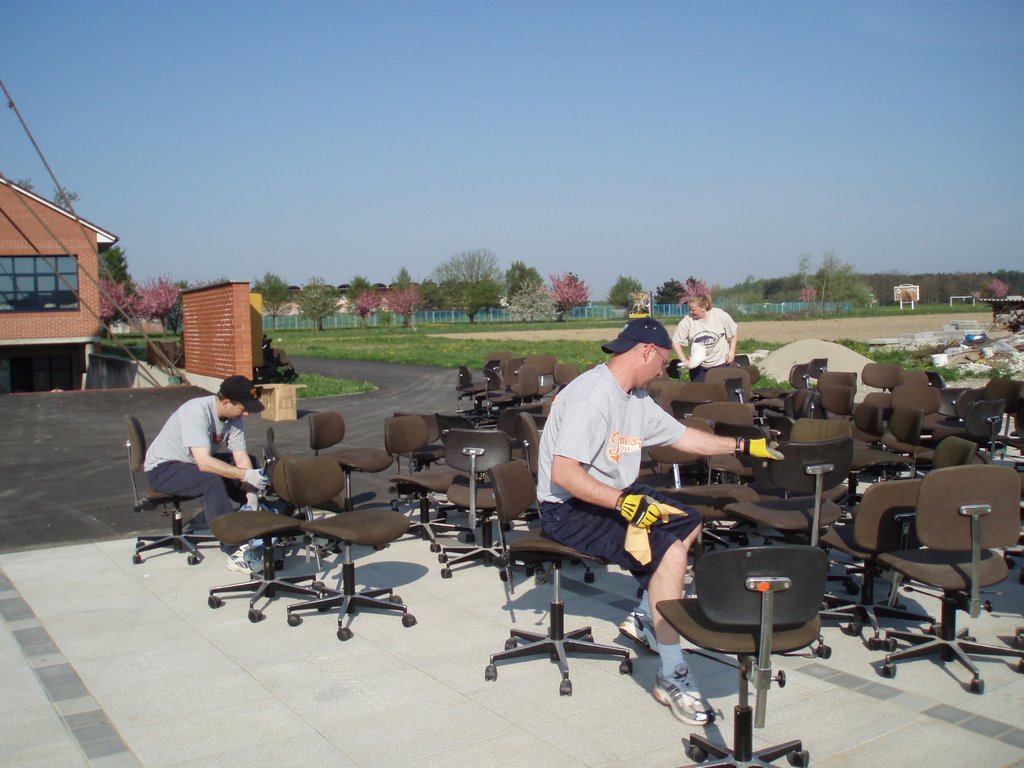
How do you earn trust with the world? You do it the way Jesus did, with a towel and sacrifice. Everyone was eager to help, even if it meant dusting dirty chairs.

From a Deaf Class to Teaching the Deaf Club


Cleaning the basement.

Julie Rice also had the chance to meet with the Deaf Club, a group of believers in Puscine that meet together for worship. With very little warning, we emailed Carol Linger and Jerry Seale, who cobbled together the materials. They used handouts from the sign language class that Julie took at FBC last fall on Wednesday evenings. They emailed the materials to Toma Magda in Cakovec, and he printed them for her class. On Wednesday, she taught American sign language to Deaf Croatian Believers. Way to Go, Team!

Relationships that Matter


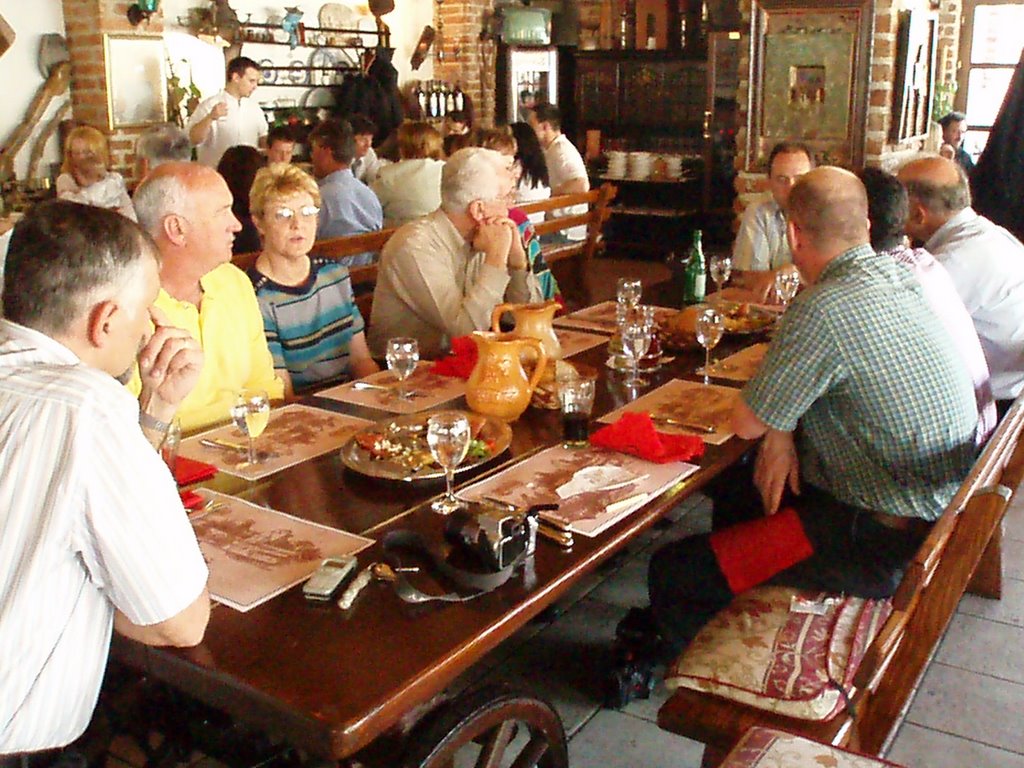
Having Lunch in Rijeka.

Opening a Door to Relationships


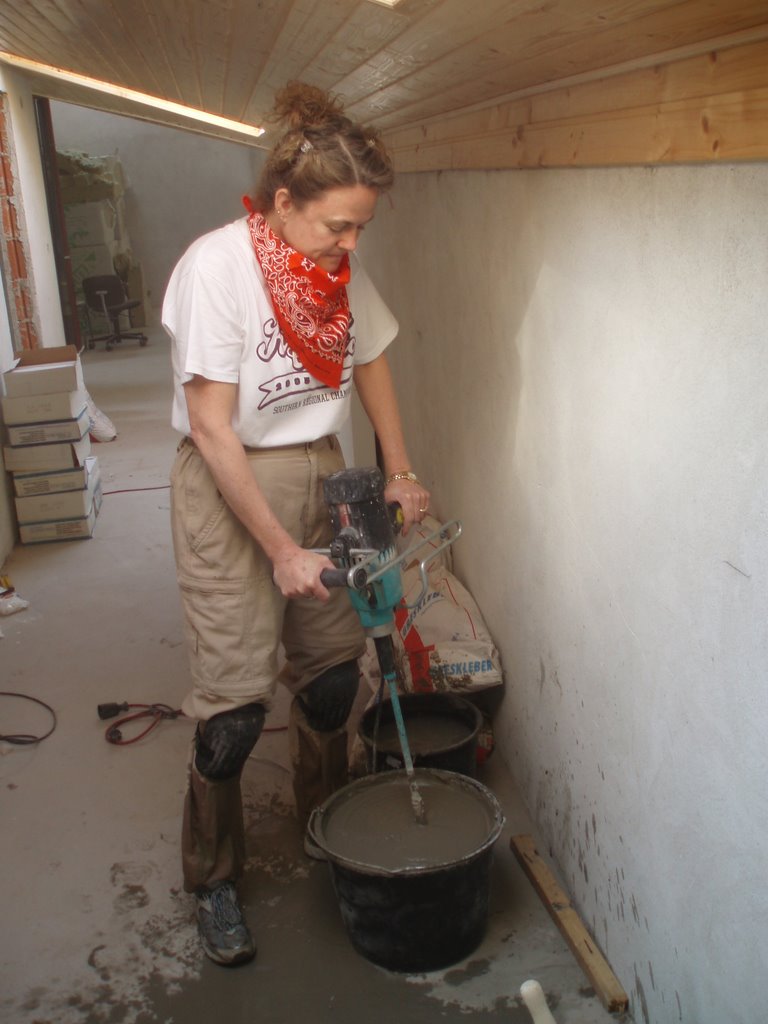
Here's Julie Rice mixing the "mud" for the tile.

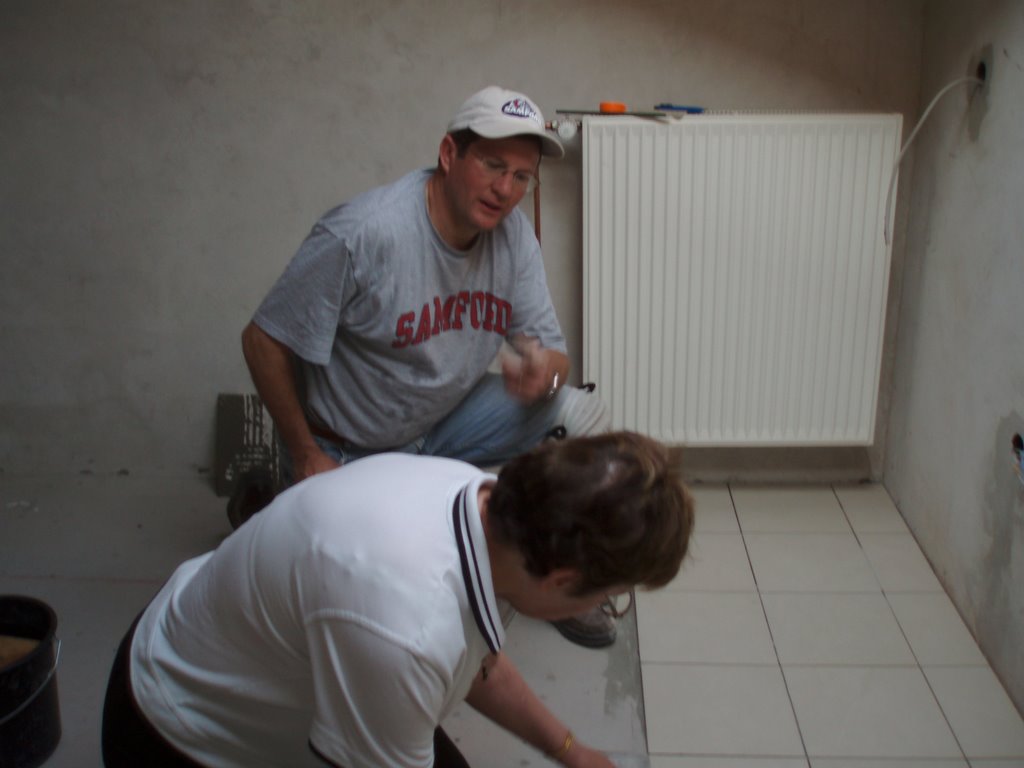
Sometimes the work of laying tile leads to a new kind of work...establishing relationships with people. Who would have thought that laying tile and cleaning out a basement could open doors to other opportunities? On Monday, that's exactly what happened. Bratko Horvatic, one of the leaders of the pastoral center, invited the team to send a delegation to one of the local elementary schools in Cakovec. Bratko, who is also a Gideon, arranged to distribute 1500 New Testaments at the school and asked for the Americans from FBC to assist him. Mike Cunningham, Kennie Riffey, and Sidney Bowman went on Tuesday morning. Out of courtesy, they met with the principal first and asked her what they had permission to say to the students. She replied, "Why don't you tell them why you are a Christian and why it is so important to you."

Mike, Kennie, and Sidney willingly shared their testimonies. The principal enjoyed their presence so much that she called three other schools to meet with them the next day. This one day in the schools gave them opportunity to share Tuesday, Wednesday, and Thursday. This morning, Brent Starling was able to go and enjoy the experience as well.

Tuesday, April 25, 2006

After


Scott Ballard lines up the tiles. The Croatians do not want us to use "spacers," so the expert tiler is able to space them evenly with the eye.

Clean Sweep


Craig Shell gives one room a clean sweep. Most of the dorm rooms were filled with supplies. After plenty of experience with moving materials, the crew was ready to clean out even more rooms.

Before


Tiling the Croatian way is a tedious experience. We start, restart, and start again. Bill Coley and Dianne Graybeal work on one of the dorm rooms. They are "Batman and Robin."

Monday, April 24, 2006

Your Team in Croatia


The 2006 Croatian Mission Team from FBC

Please pray for the team as we continue to minister in Cakovec.

Eating Time


Greg Reed and Mitch Reed (The Reed Twins?) enjoy a light meal together.

Everything But the Kitchen Sink


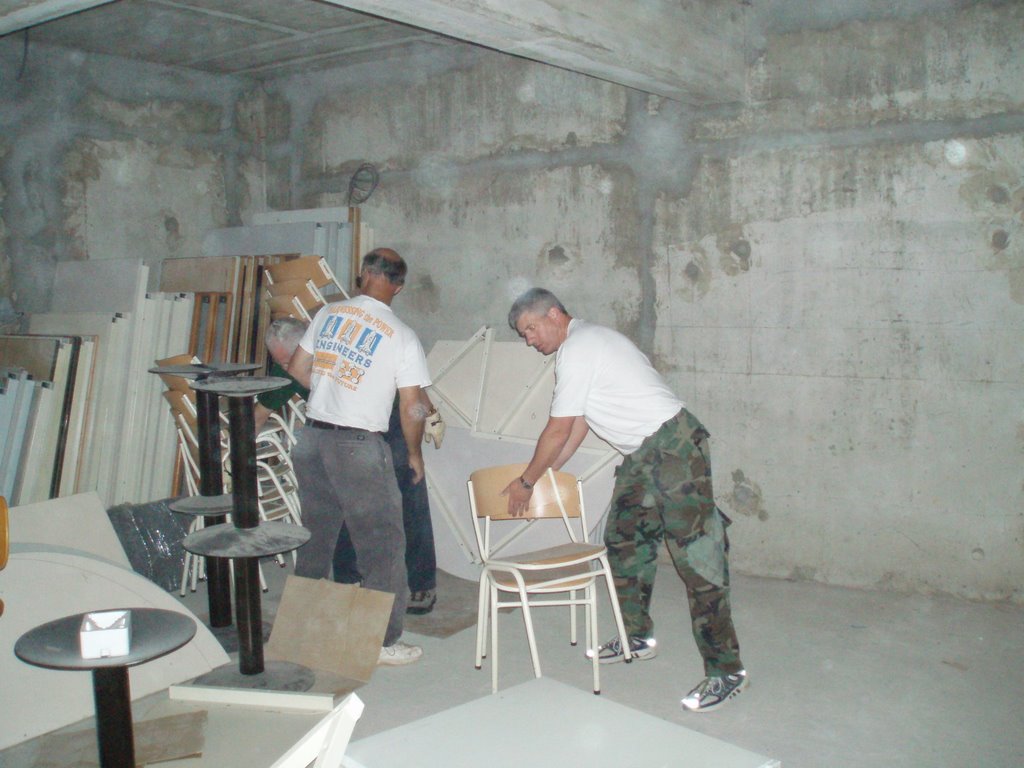
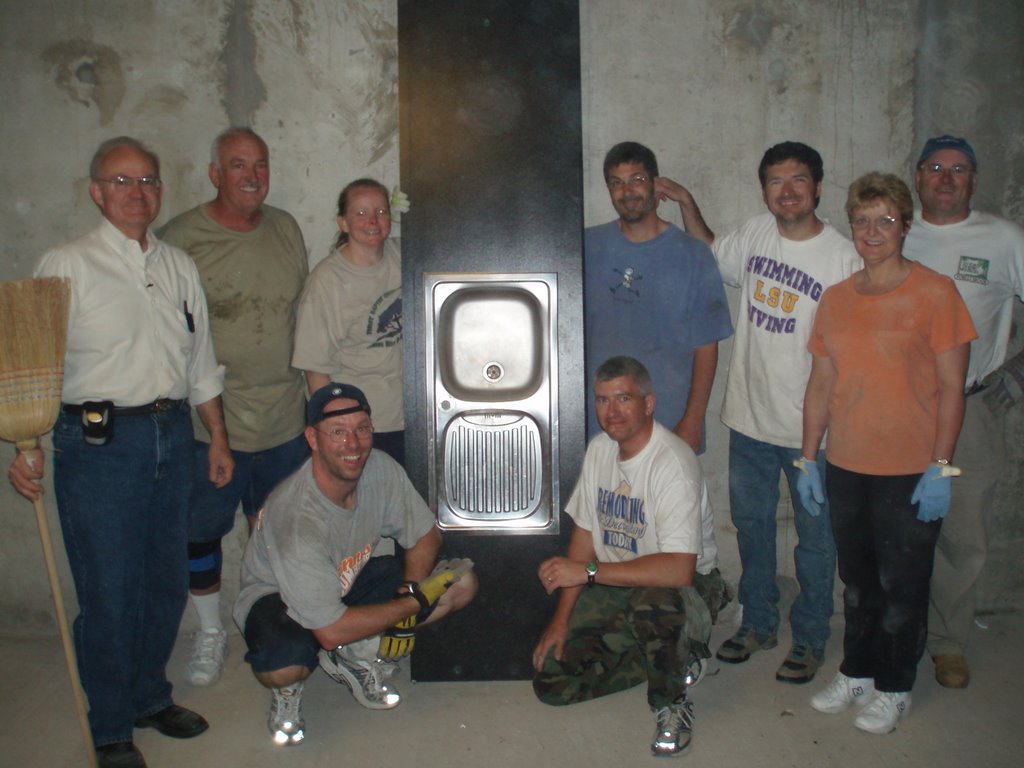
The basement group moved everything but the.... We even moved the sink. What a project.

Hi-Ho Hi-Ho, It's Off to Work we....?


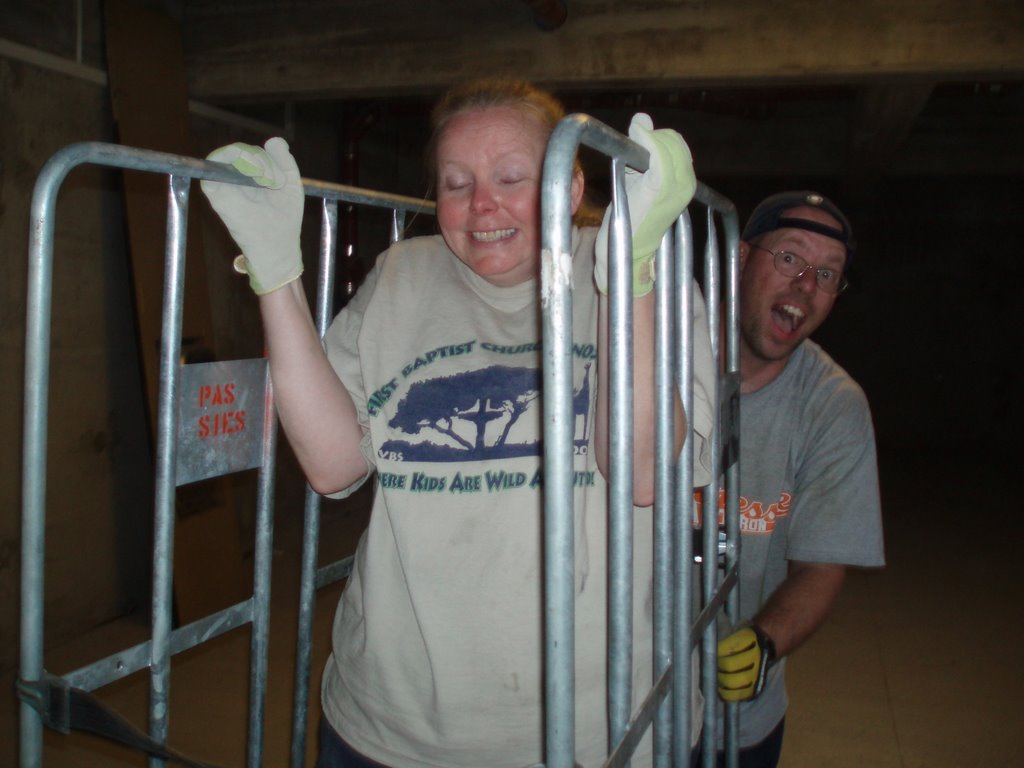
Amy Pickle enjoys a ride on the dolly while Link Hudson gives her a push. We have a little fun every once in awhile. Link is also our group's "videographer." Link will be producing a documentary of the trip that you will not want to miss.

Working 9 to 5

Ok, we worked a little longer than 9-5. In this picture, you see Scott Ballard and Scott Moore rushing to learn the fine art of laying tile.

We closed the evening with a devotional led by Andy Edmondson. He discussed the importance of preparing your mind to serve the Lord.

Tomorrow promises to be an exciting day. A few of the team will accompany one of the Croatian Baptists to the local school to distribute New Testaments and speak about our work here. Others will continue painting and laying tile.

Experts

Steve Bowman demonstrates his skills

How do you become an expert in laying tile? Very carefully. The tile team divided into four pairs, each taking a room. A Croatian supervisor dropped into tell them how they were doing and "advise" them if they needed to correct something. Everyone had their moments when they needed to start over.

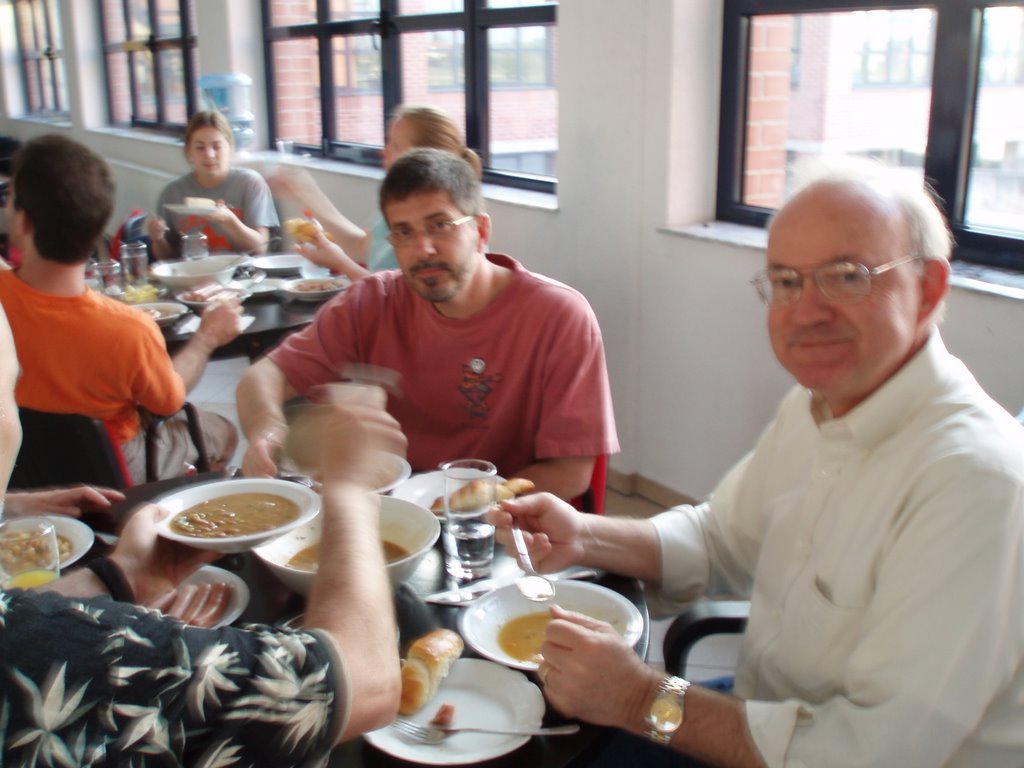
We broke for lunch around 12:00 noon and had supper at 6:30. Lunch was sandwiches and chips. We enjoyed a fine meal of wurst and soup for supper.

Everybody's Working for the Weekend....

L to R Mike Cunningham, Rita England, Matthew Evans, Craig Shell, Mark Palmer, Andy Edmondson, Marion Graybeal, and H. L. England compliment each other on a fine job of stacking chairs.

The name of the game in Croatia is flexibility. No one expected to be clearing out a room on the first work project on Monday morning, but we are here to serve...so that's what we did. Craig Shell led this capable group of servants.

We started bright and early at 7:30 a.m. (Some early birds began moving furniture around 7:00 a.m.) The Croatian Baptists provided 4 local craftsmen to teach us how to lay tile and to supervise us as we moved the furnishings.

Working Hard

Brent Starling, Dianne Graybeal, and Julie Rice learn how to lay tile.

The group today has been working on two projects. The first group laid tile on the third floor of the pastoral center. We are finishing dorm rooms to make them ready for guests and residents in their youth facility.

The second group moved furniture out of one room to prepare the same room for painting. They scraped walls today and will be painting tomorrow.
Working for the Weekend!

We're hard at work this morning in Croatia. Good morning to you in the States. Here are a few shots of our experiences today.

Steve Bowman lays tile. What an expert!

Working for the Weekend

We're hard at work this morning in Croatia. Good morning to you in the States. Here are a few shots of our experiences today.

Steve Bowman lays tile. What an expert!

Everybody's Working For the Weekend

We're hard at work this morning in Croatia. Good morning to you in the States. Here are a few shots of our experiences today.

Steve Bowman lays tile. What an expert!

L to R Jim Moore, Steve Bowman, Kinney Riffey, and Sydney Bowman prepare to get dirty!

In the basement, Rita England, Amy Pickle, and Link Hudson load tables. Yours truly "watches," and one of our Croatian friends is supervising. We are clearing out a room this morning so that it can be painted. A hotel recently donated used furnishings to the pastoral center, and they are storing tables, chairs, and materials in the basement. We are in the process of sorting and re-stacking so that we can paint.
L to R Mike Cunningham, Rita England, Matthew Evans, Craig Shell, Mark Palmer, Andy Edmondson, Marion Graybeal, and H. L. England compliment each other on a fine job of stacking chairs.

L to R Brent Starling, Dianne Graybeal, and Julie Rice receive instructions. We have a Croatian tile expert at the center with us this morning. He trained the crew for an hour or so, and then they went to work on the dorm rooms on the third floor. We're staying on the second floor, which gives us easy access to our rooms.
Scott Ballard (L) and Scott Moore rush to be trained in tiling. We awoke at 6:30 a.m. for a 7:30 a.m. start to our day. Some "early birds" were moving furniture by 7:00 a.m. Greg Reed is our supervisor for this part of the project.

Sunday, April 23, 2006

Croatia Experiences

Pitschlike Lakes

Most of the group was able to go to Pitschlike Lakes on Saturday. Bill Coley and Link Hudson pose for the camera. The lakes are in a national park in Croatia.

The Rustica

Our first trip to Rustica was Saturday evening. This is the traditional restaurant stop in Cakovec, and we enjoyed a fine meal of Pork Chops, Steak, Bratwurst, Sausage, Potatoes, and Vegetables.

New Church Site in Rijeka

Puscine and Rijeka

Our whirlwind tour of Croatia continued today. The group worshipped in two locations this morning. One group went to Ivica Horvatzic's church in Puscine, about 10 minutes from here. Another group traveled 3 hours to Rijeka, along the coast of Croatia to Rijeka. Mike Cunningham preached in Puscine, and yours truly preached in Rijeka. Mike led a seminar back at the Pastoral Center in Cakovec this evening, and I led a seminar in Rijeka. Mike focused on unity and "finishing strong." I discussed "moving beyond the walls of the church."

Worship in Rijeka

The church in Rijeka is relocating to the highway that connects Zagreb with Trieste, Italy. This prominent location will give them great visibility and an opportunity to minister better in the community. After worship on Sunday, my group saw the foundation of the new church and prayed a blessing on their work. We took some time for coffee in Opatje, and Matthew, Toma, and I returned for the seminar in Rijeka.

Stevo and Matthew

One of the members is of the church in Croatia named Stevo (pictured with Matthew) has been emailing Matthew for the past two years for us to visit them in Rijeka. Matthew and Stevo met officially for the first time this morning. After I met Stevo, however, he reminded me that we actually met once before at a conference in San Antonio two years ago. What a small world! He is very excited about their project, and he has worked with the architect to design the building.


Group photo at the new church in Rijeka

Saturday, April 22, 2006

Cakovec

Preaching in Vinkovci, Toma Magda is translating
One of the most important things we do in Croatia is affirm and bless the work that God is doing through these people. They work long hours and turn multitasking into an art form. While riding with Toma Magda today, I asked him about all the things he does in "ministry." He serves as the President of the Croatian Baptist Union, directs and oversees the Pastoral Center, works with the church that meets here at the center, and helps his wife direct the training institute they have for lay people. He's also a husband and father of four. And I thought I had a busy life!

Our hosts have taken the group to see a beautiful lakeside national park. Some of our group are also traveling to Rijeka to see the coastline.

Tonight, Mike Cunningham will teach two sessions on unity at the Pastoral Center in Cakovec. Tomorrow, Bill will preach in Rijeka and lead a session on how the church can "move outside the walls" for ministry. Mike will be preaching in Puscine in the morning and teaching at the Pastoral Center in Cakovec tomorrow evening.

On Monday, we begin hauling materials, painting walls, laying tile, and hanging doors.

Friday, April 21, 2006

In Croatia

We made it to Croatia. I have been enjoying the Eastern part of Croatia today while waiting for the group to arrive. The team arrived safely in ÄŒakovec tonight after a long flight and drive. This morning, I visited the Baptist house at the University of Zagreb, and this evening I taught a seminar for laypeople in Vinkovci. My seminar was entitled ˝Holy Living in an Unholy World˝ from Matthew 5-6.

The Church in Vinkovci

Vinkovci is a town that has defied the odds-- like many in Croatia. Fourteen years ago, the town was being shelled by Serbian missiles. Today, a native of Serbia is the worship pastor at the church where I taught this evening. In this part of Croatia, ˝the war˝ was a living reality. Every person has a story of where they were and what they were doing from August 1991-May 1992 when the attacks on this area intensified. The war against Serbian aggression wreaked havoc over this place, and the church where I taught tonight was destroyed by a fire ignited from a blaze that started at an adjacent building. Their rebuilding efforts took over 3 years.

After the war ended, the government did not pay to rebuild the church. The church, however, assisted with humanitarian relief for refugees. One of its refugee trucks was hit by mortar fire during one of its relief operations. The govenment was unwilling to pay very little to replace the truck, and the church´s attorney advised them to wait it out. Three years later, the government was forced to settle for the amount of the truck plus interest. The amount of the settlement was $250,000, plenty of resources to build most of the church they lost years ago.

David, the Worship Leader, and his family
Lazare, a lay leader in the church, with his son David, who is attending the seminary in Osijek

Talking with a Student named Safet

Sunday, April 09, 2006

Judas is Back

Just in time for Easter, Judas has one last gasp. At least the writer of his book has. “The Gospel of Judas,” a late third-early fourth century biography of the betrayer of Christ has surfaced through the National Geographic Society. I have not read the book; but from what various reports have suggested, the Gospel fits a large swath of manuscripts that give a different account than the one in the 4 New Testament Gospels. This should come as no surprise. After the New Testament Gospels were circulated, Gnostics of all stripes wrote alternative versions of the lives of the prominent figures among the early Christians, including Peter, Mary Magdalene, Thomas, Jesus, and now Judas.

Scholars of all persuasions, including yours truly, study the Gospels that were around in the early churches for various reasons. Some of us use them for better information about culture, habits, linguistics, and data. There is much to be gained by comparing the New Testament Gospels with other literature of their day. We do that with all the books of the Bible to help us understand what the ancient writers were thinking and the ancient audiences were hearing. The writings only make sense in their contexts. Just as we study the archeological findings from Ephesus to know more about the city of Ephesus, we study the data from ancient literature to know more about the most important ancient literature in the Bible.

There are good reasons the Gospel of Judas, like the other Gnostic Gospels, were rejected as authoritative by the church. One, it’s a “Johnny/Judas come lately” book, 200-300 years late. The New Testament Gospels were written much earlier in the first century. All Gnostic Gospels are later than the New Testament's. Second, the Gnostic Gospels distorted the accepted portrait of Jesus from the early church. Some scholars like Bart Ehrman and Elaine Pagels are determined to find a conspiracy behind this. I think it was less conspiracy and more consensus. The early Christians had four accurate accounts of the life of Jesus and his disciples. The others did not match the information. The Gnostics changed the information to fit their purposes. Some thought he was human and not divine; others, vice versa. Most of the early church leaders advised against using them as authoritative literature. We have carried on that tradition today with the 27 books we call the inspired New Testament.

I should also warn you about something else. The Gospel of Judas was purchased from an antiquities dealer. The last time we had a major archeological find from an antiquities dealer was a couple of years ago when scholars thought they found the ossuary (casket) of Jesus’ brother James. It turned out to be a forgery. Stay tuned.

Either way, don’t let your resurrection faith be worried about another Gospel written much later than the New Testament’s Gospels. The four we have to go on have sufficed us for 2,000 years of church history and will remain that way for centuries to come. The Gnostic Gospels actually give us more reasons to accept our Gospels and believe in the Christ of the resurrection.

Monday, April 03, 2006

T-Ball Time

We're a T-Ball family now. Parker told Kelly and me several times, "I'm kind of nervous about my T-Ball game." Having no frame of reference for this sport, I reassured him: "I get nervous every time I talk to the church on Sunday." No luck. Parker was still anxious. We missed our first practice because he was out of town, so we had little to go on.

His team, "The Braves," bears little resemblance to the professionals in Atlanta. They wear the logo, and the similarities end there. The only thing brave about this team is that they have the courage to go out and hear their parents tell them how cute they look.

Parker batted second in the line up last Saturday. Thankfully, his good buddy John Beam went first to show him the way. His first hit-- a hot shot to the 1st, 2nd, and 3rd baseman (all the kids converged on the ball) was perhaps the best hit of the game. I'm not biased.

The highlight of the game came in the second inning. Parker played first base and actually caught the ball on one hop after one of his teammates threw it (lofted it) to him. He even got a hand from the crowd. Coach Beam was even impressed. Not bad for missing your first practice. Can you imagine what he might be capable of in game 2?

Before bedtime Saturday night, Parker was wired. Kelly came into the bedroom: "Bill, you've got to talk to your son. He's asking tons of questions, and he's not going to sleep." We reviewed the day. He told me he was "burning up" in his hat. I told him he still had to wear the ball cap. He wanted to know if I was going to miss any of the practices. I told him I would be at ALL the practices. He told me that he was still nervous about the rest of the T-Ball games. I guess I need to find more words of assurance.

Saturday, March 25, 2006

Footprints

Last week, Parker, Kelly's dad, and I were walking on the beach. Parker wanted to show me a very large sandcastle that looked like a foot inside a beach sandle. After walking 25 feet or so, he remembered that jellyfish were washing ashore on the beach. He saw them the last time he walked to the sandcastle.

"I don't want to get stung by jellyfish," he screamed.

I assured him, "It's ok, just hold my hand; we won't walk on the jellyfish."

"No, I'm s-c-a-r-e-d of jellyfish," he said, voice trembling.

Kelly's dad offered a solution: "Parker, just walk in my footprints. I'll walk down the beach, and you walk where behind me where my footprints are."

As Parker followed his Papa very deliberately, I was reminded of how we relate to Christ. We walk where he has already been. His footprints have plenty of room for all of our missteps. He safely maneuvers past the jellyfish of life. We do not miss out on all the pain, but by walking in his footprints, somehow the difficulties of life do not seem quite as severe.

We arrived at the sandcastle, and it was still intact. A discovery together because we were willing to step safely together.

Strangers Among Us

What is the Baptist position on immigration? I'm not sure there is one. I do know that as long as America has been a nation of immigrants, those who are already here have spent a good deal of time and energy debating who else should be allowed into the country.

Because Jesus had an affinity for strangers, Baptists do too. As we deal with immigration nationally, here are some guiding principles for thinking about these newcomers locally.

1.) The best thing we can offer immigrants is the love of Christ. The first step to empowering someone to be a fully functioning member of society is to invite them to a relationship with Christ. No matter how someone arrived in our country, we are to be witnesses, in Judea, Samaria, and even when the uttermost parts of the earth come to us. We're attempting to do that through our Latino church locally.

2.) New residents in the states need holistic compassion. It's not enough to pray with someone and send them out the door. We need to be Christ's agents in transforming relationships. One woman we have ministered to at First Baptist Knoxville was undocumented and needed a heart valve replacement. We visited her in the hospital, helped her find resources to pay for the surgery, and have cared for her through her Spanish-speaking Sunday School class. It's been a team effort among staff, laypeople, and concerned citizens. She's back on Wednesday evenings learning English and active on Sunday mornings in Bible study.

3.) Education is the key to a deeper relationship with Christ and society. When someone receives and education, they can tap into resources never thought possible. Through ESOL, Sunday School, and other programs, we can educate immigrants and share with them the gift of knowledge.

As we debate immigration nationally, don't miss out on the opportunities to live your faith personally.

Brady Ball

Coach Brady is at it again. The basketball wizard of LSU, who came from the likes of Bellhaven College, and led the Samford program when I was just a student there, is now getting long-deserved accolades.

He knows how to coach. When in doubt, he disrupts the opponents' rhythm. At Samford, he ran an offense that befuddled everyone--even the fans, at times. He brought his crew to Baylor and won one of their tournament games, if I'm not mistaken. The sports editor tried to pay him compliment by calling his team "scrappy." He doesn't like for his team to be called scrappy, and he had some choice Mississippi words for the editor. In this year's tournament, he's outcoached the likes Coach K, arguably the best in the tournament.

When he was hired LSU, the skeptics were out again. After all, who would want to follow Dale Brown? Could John Brady get LSU back to glory? The doubters aren't talking now.

He's an even better role model: hard worker, stable, and willing to challenge his players. Even if he does not win another game, he has demonstrated what we Samfordites knew all along. His persistence has made him who he is today, and no one is calling this LSU team "scrappy."

Friday, February 24, 2006

Bill, Bill, George, and Birds


Former President Bill Clinton was here earlier this week. President George Bush will arrive next week. So in the middle of a bird flu and presidential visits, I've arrived to give some input to the daily affairs of India. Ok, I'm not nearly as important as birds and presidents, but it has been interesting that the world is focused on India right now.

About the bird flu, in Vizag, it's a big joke. They laugh about it, and they're still serving omelets for breakfast at the hotel. In Northwest India, it's no laughing matter. About the presidential visits, people are taking notice as well. Bill Clinton has been promoting his AIDS awareness causes; George Bush will arrive on the heels of a flu outbreak and proposed changes in nuclear policy.

So down in a resort town on the Bay of Bengal, we've been talking about kingdom issues-- God's kingdom. There are over 440 indigenous missions organizations in India right now, and they send 44,000 missionaries. You would think that is enough missionaries. But India's Christian population is actually shrinking. According to statistics I've read from my host, Christianity has shrunk from 4% to 2.4% of the population; in the northeast, it's less than 1%.

Some say it's because the government is suppressing the numbers (they don't care for Christianity much in a Hindu/Muslim/Sikh country). Some say we have many people planting churches, but they are not very qualified, trained, or educated. We need to do a better job of training them in Christian colleges and seminaries. Others say the American missionaries spent most of the past 30 years trying to get people to become American Christians, rather than Indian Christians. In other words, you have to sing American hymns, choruses, and adopt Western values in addition to giving your life to Christ. I'll leave that for the missiologists to decide. I will tell you that we sang a lot of praise songs at this church planting conference. Do you remember, "You are the Rock of my Salvation"? How about, "Open our Eyes, Lord"? We've exported praise and worship to India.

The bottom line-- Indian people still need the gospel, and they need trained leaders. Western values are on the rise-- and not the kinds sung from the hymnal or seen on a screen at church. Everything that we decry about American materialism and economics is growing in the subcontinent. We might be the place for call centers and outsourcing, but we've also delivered plenty of other struggles to this culture as well. And yes, they have a good strong dose of Hindu civil religion to go around to make doing the work of Jesus even more urgent. It makes me even prouder that our society values religious liberty and freedom-- not just religious tolerance.

As we were walking the streets of Vizag yesterday, I heard a strange sounding noise. "What's that?" I asked the guide.
"It's the Muslim call to prayers."
"How often do they do that?" I asked.
"About 4 times a day" he replied.

As we passed by the mosque, I remembered that there are problems deeper than bird flu, AIDS, or nuclear issues that neither Bill, George, or this Bill can affect. Only by God's power will people hear the name of Christ, and he will use God's people to be his agents of love and reconciliation.

Thursday, February 23, 2006

Closing

This morning, we had the closing sessions of the church planting conference. After a seminar, we joined together to share the Lord's Supper. This diverse group from Southeast Asia and the United States joined hands and hearts to celebrate one of the ordinances that bind us. We united across denominational, ethnic, and linguistic lines as a visual reminder that we are one in Christ. The children then presented beautiful garland leighs full of bright colorful flowers from India. What a gift to be present here and share in this week.

As we said goodbye, Kelly and I were even more grateful for our church family to return to and reminded of how blessed we are in the states. We have been blessed with so much as Americans and should share generously in those resources. Godspeed.

Wednesday, February 22, 2006

Culture


Last night we had a dose of culture. After speaking at 3 workshops and preaching for the closing session, we had a "Cultural Program." Each nation represented here sang or danced a Christian tune from their country. Some children from the orphanage here presented traditional Indian dances and music. A student at the Bible college also danced (and we're talking amazing dance here) to a Christian song in the Hindi language. This is quite a talented bunch, and they're willing to give all of their gifts to the Lord. Kelly and I sang a duet during my sermon. I'm very glad we did not have to follow up with an American dance!!!! Do you know what a 3 footed preacher looks like?

We have relocated to a hotel on the Bay of Bengal. We awoke this morning to a beautiful sunrise, small fishing vessels on the water, and the reminder that the sun never sets on the Lord's work. We will share communion with our brothers and sisters here this morning and then shop this afternoon.

Getting Planted

Planting churches is a lot like nurturing children. They grow in life cycles as children do, thus they need patience, water, love, food, time, love, and more love. Around me this week are people who are in the trenches doing the work of the kingdom. They have come from miles around seeking to plant and nurture new churches; like other pastors, they have come for restoration of their souls and good fellowship with colleagues.

We gather at Vision Natives, a ministry of Arjun Chiguluri and his wife Raja. VN has been around since 1997. They started as a children's ministry, serving as an orphanage and home away from home for needy children. They expanded to a church planting center, school, and Bible college for this area. They are reaching unreached people groups in areas where many people are not. They have three very large buildings, beautifully adorned, perfect for this work. One building is the conference and classroom center, another is dorms for children, another is an eating hall and residence for college students. College students study here 11 months out of the year, as well as the children. They go back to their homes for a month in the spring. Families of college students come to visit them one weekend a month. That would be tough to do. All of them leave here prepared for the work God has for them. Many of the college students are here with us in the conference.

The work here crosses denominational boundaries. Some are Baptists; all are some for of evangelical. I haven't found any Pentecostals yet. Each person is uniquely gifted and willing to serve. I have met one fellow who worked with Eastman chemical in Kingsport for awhile before moving to China. He is working part time now and planting and supporting house churches in China. Another couple from America works with a church for missionaries and families in Thailand. He's a pastor and church planter.

The weather? It will be in the 90s today; some rooms have air conditioning; thankfully, our hotel does. It's warm enough here to nurture the hearts of some needy pastors and to teach this pastor a lot about the kingdom of God.

Tuesday, February 21, 2006

Welcome to India

One of the greatest feelings in the world is to see your name on a small white sign. It's like a welcome mat in a foreign country. After a huge sigh of relief from making it through customs in India, Kelly and I were then greeted by two welcome faces-- and our names appropriately scribbled on a white sign. Our friends, Sandy and Mercy, arranged for one of their friends to meet us at the Mumbai airport and escort us during our stay. We spent the night in a hotel in Mumbai and woke up the next morning bright and early. Neither one of us could sleep very long, so we waited for our new friend to arrive at breakfast, had a cup of coffee and some toast, and boarded the plane for Vizag.

On the way to the airport, we had our first lesson in driving in India. When in doubt, don't drive! I'm glad I was in the back seat, not the front. These people are crazy. I've never seen anything like it. If there are traffic rules, I don't think anyone abides by them. They just blow their horn and go. And yes, they drive on the other (left) side of the road. I guess that's one of the major things left over from colonialism.

We finally arrived in Vizag, on the southeast coast of India, around 2:00 p.m. We checked into the hotel and arrived at the conference around 5:00 p.m. The conference is being attended by people from Nigeria, Thailand, China, Burma, U.S.A., and of course, India. The 100 participants plus speakers are truly international in flavor. People are dealing with all sorts of issues-- from fighting AIDS in Africa to dealing with a Tsunami on the Bengal Sea. I sat across the table tonight from a pastor who dealt with the Tsnumai on the coastline of India. He has started about 10 churches along the beach.

In their own way, each person carries a sign with them back to their native land. The names are not inscribed yet, but they will be. They will be the names of future believers who will be touched by these people and who will have a church to attend because of this conference. What a welcome.

Monday, February 20, 2006

India Trip

Kelly and I are on the way to India. I am preaching at a church planting conference in Vizag. I will try to blog from there. Right now we have landed in Paris and are en route. We will fly into Mumbai/Bombay and rest and then fly to Vizag. Pray for us as we travel.

Google Search

Google